smartlockmarket.com

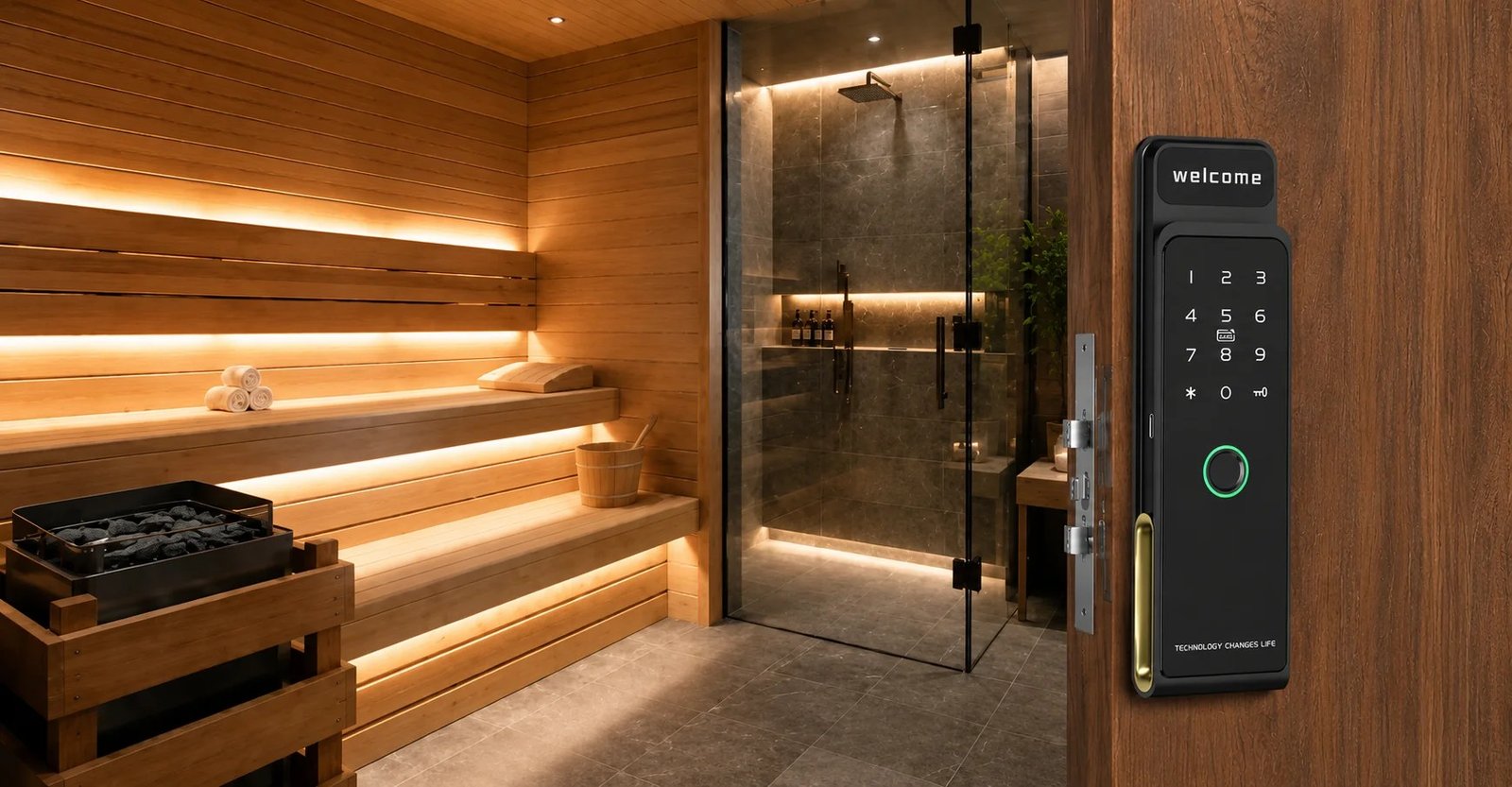
Sauna Locker Card Locks: What Facility Managers Should Know
Sauna, spa, and gym locker rooms fail locks differently than hotel guest rooms. Heat, humidity, wet hands, and high daily turnover punish the wrong hardware—especially consumer locks that were never designed for wet zones.
For most facility managers, the practical default is still the sauna card lock (RFID / induction). Cards are fast to issue, easy to revoke, and familiar for members. Password and fingerprint models can work in the same building, but only when the environment and user journey match.
Below is a facility-focused guide to choosing sauna locker card locks—and when to mix in other unlock modes.
8
1. Why Sauna Lockers Need Special Locks
A locker door near a steam room is not the same duty cycle as an indoor apartment door. Condensation, cleaning chemicals, and barefoot wet traffic all raise failure risk if you install a dry-area lock and hope for the best.
- Humidity and splash: electronics and keypad membranes must tolerate wet-zone conditions
- High turnover: dozens of open/close cycles per locker each day
- Shared users: credentials must be issued and revoked quickly between members or day guests
- Staff workflow: attendants need master or floor access without breaking member privacy
That is why sauna projects usually standardize on dedicated sauna locker hardware—not the same series used for hotel guest rooms.
2. How Sauna Card / Induction Locks Work
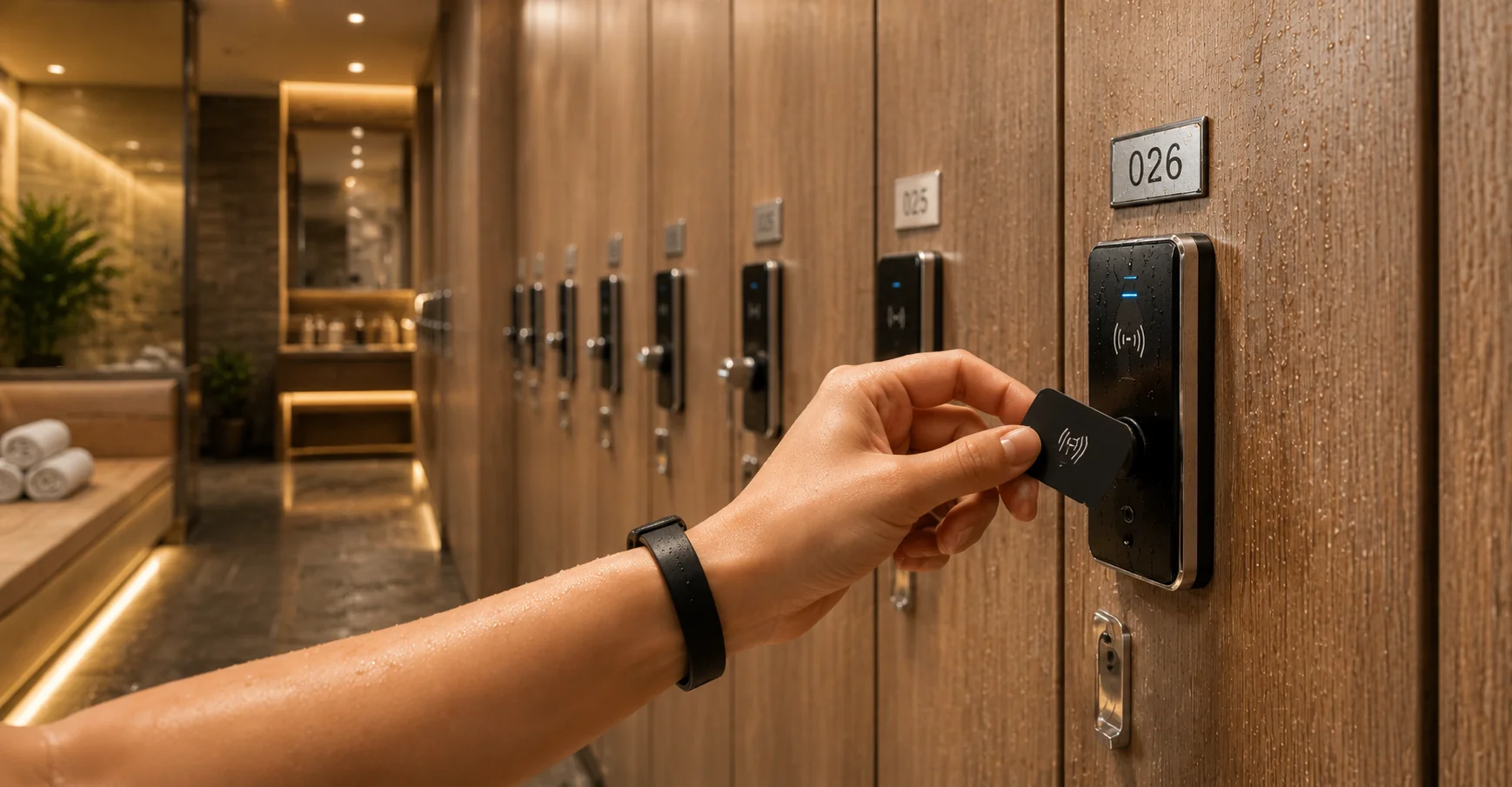
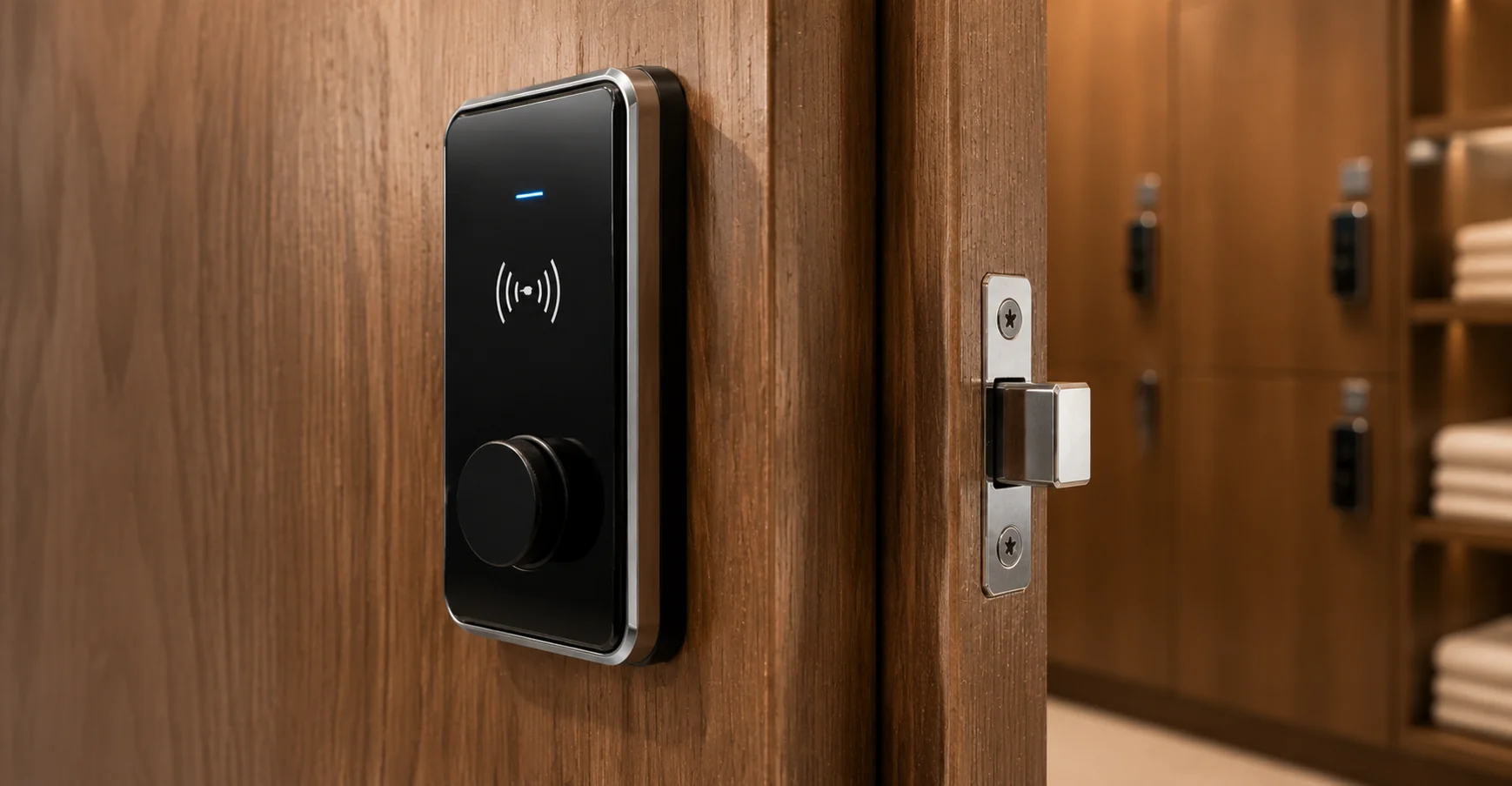
Sauna card locks (often called induction or RFID locker locks) use a wristband, key fob, or card as the credential. The member taps to lock and unlock. Many systems bind the credential to one locker for the visit, then free it when the member leaves.
A typical facility workflow looks like this: member checks in → front desk or kiosk issues a wristband/card → member selects a locker and taps to lock → after use, tap to unlock and return the credential → staff can clear abandoned lockers with a master card.
- Best for: spas, gyms, sauna clubs, hotel wellness areas with shared lockers
- Ops dependency: wristband/card stock, encoder or issue terminal, master cards
- Strength: fast turnover, low guest training, clear staff override path
3. Card vs Password vs Fingerprint
Use this table as a first filter for locker-room doors—not guest-room doors.
| Feature | Sauna Card / Induction | Sauna Password | Sauna Fingerprint |
|---|---|---|---|
| Primary credential | Wristband / RFID card | PIN code | Fingerprint template |
| Wet-hand usability | Strong | Medium (keypad with wet fingers) | Weak to medium (sensor rejects rise) |
| Issue / revoke speed | Very fast | Fast if codes are temporary | Slow for one-time visitors |
| Guest training | Minimal—tap to lock | Need clear PIN instructions | Enrollment step required |
| Consumables | Cards / wristbands | None | None |
| Best fit | Shared lockers, day spas, gyms | Small clubs, staff lockers | Member-only lockers with stable users |
| Main risk | Lost wristbands, encoder downtime | Forgotten / shared PINs | Wet fingers, enrollment labor |
4. Ops, Cost, and Maintenance
Unit price is rarely the real budget. Facility TCO is driven by wristband loss rate, battery changes, abandoned-locker clearance, and how often attendants escalate “lock won’t open” tickets.
Card / induction systems win on throughput. Expect ongoing wristband/card cost and a clear master-card SOP. Ask for battery life under high open/close cycles—not showroom standby numbers.
Password locker locks cut consumables, but support tickets rise when guests forget codes or share long-lived PINs. Use stay-window or one-time codes where the system allows it.
Fingerprint locker locks can feel premium for long-term members, but wet and steamy rooms raise false rejects. Keep a card or password backup mode if you deploy biometrics near wet zones.
- Card TCO drivers: wristbands, issue terminal, master cards, batteries
- Password TCO drivers: support labor, keypad durability, code policy
- Fingerprint TCO drivers: enrollment time, sensor cleaning, backup unlock modes
5. Which Fits Which Facility?
- Hotel spa / wellness floor: sauna card locks for guest lockers; keep hotel room locks on a separate series
- Gym / fitness club: induction wristband locks for shared lockers; password for staff rooms
- Public sauna / bathhouse: card locks with strong master override and fast clear for abandoned lockers
- Private member club: card primary; fingerprint only for assigned long-term lockers away from direct steam
- Mixed project: standardize one locker lock family for finish and battery type—even if unlock modes differ by zone
6. Common Buying Mistakes
- Installing hotel door locks on locker doors. Form factor, cam/latch, and humidity rating usually do not match.
- Ignoring wet-hand reality. Fingerprint-only near showers creates complaint spikes.
- No master / emergency open plan. Attendants need a documented way to clear lockers after closing time.
- Buying wristbands without a loss/replacement process. Lost credentials are normal—plan stock and fees.
- Skipping door and cam measurements. Locker thickness and tongue/cam type decide fit more than product photos.
- Mixing too many lock families. Battery sizes and spare modules multiply maintenance work.
7. Buying Checklist
- Map locker types: shared day lockers, assigned member lockers, staff lockers.
- Confirm door thickness, cam/tongue type, and opening direction before sampling.
- Ask for humidity / wet-zone suitability in writing—not only “indoor use.”
- For card locks: test issue, lock, unlock, master clear, and low-battery alerts.
- For password / fingerprint: test wet-hand use and backup unlock modes on site.
- Plan wristband/card stock, replacement fees, and end-of-day abandoned-locker SOP.
- Standardize battery type and spare ratio across the locker room.
- Confirm warranty, spare modules, and after-sales response for your market.
8. FAQ
Why are card locks preferred in sauna locker rooms?
They handle wet hands well, issue and revoke quickly, and need little guest training. That fits shared lockers in spas, gyms, and hotel wellness floors.
Can fingerprint locks work near steam rooms?
They can for assigned member lockers away from direct steam, but wet fingers raise false rejects. Keep card or password backup if you deploy biometrics in wet zones.
What should facility managers confirm before sampling?
Locker door thickness, cam/tongue type, humidity suitability, master override, battery type, and an abandoned-locker clear procedure.
9. Bottom Line
For most sauna, spa, and gym locker rooms, card / induction locks remain the best default: fast issue, fast revoke, and workable with wet hands. Password and fingerprint locks are useful additions for staff doors or assigned member lockers—not automatic replacements for shared wet-zone lockers.
Start from humidity, turnover, and attendant workflow—then choose unlock modes around that reality.
Browse sauna induction locks, sauna password locks, and sauna fingerprint locks, or contact us with locker counts and door drawings—we can help you standardize one locker series before you sample.